
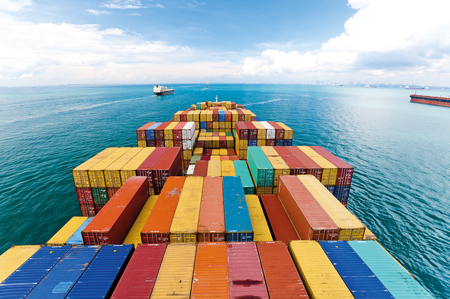
 Red Sea shipping refers to the crucial trade route connecting Europe and Asia via the Suez Canal, vital for global commerce, but currently experiencing major disruption due to Houthi rebel attacks from Yemen since late 2023.
Their actions have forced most carriers to reroute ships around Africa’s Cape of Good Hope, which increases transit times, costs, and creates supply chain volatility. However, some potential reopening discussions are emerging.
AP Moller-Maersk has completed a second transit through the Red Sea in a further sign of normalising liner services. The Danish carrier said the passage was successfully completed on 11-12 January by the US-flagged, 6,478-teu Maersk Denver (built 2007). It is only the second Maersk vessel to complete a transit through the Bab el-Mandeb Strait and into the Red Sea in just over two years. Very few others have made this ancient trade route with most freight companies not ready to take the risk.
Container lines deciding to navigate back to the Red Sea is arguably the most important development to watch for in the global shipping market this year. And it’s not a matter of ‘if’, but ‘when’. And should one big company decide it’s worth the risk, others will surely follow. The Suez Canal has been a vital link for modern East–West trade for decades, handling over 15% of global goods trade and up to twice that share of global container traffic, particularly consumer goods.
Detouring around the Cape of Good Hope has been common practice for most container vessels for nearly two years, following Houthi attacks in the Red Sea region that began in late 2023. This unprecedented avoidance lasted far longer than expected, triggering a rebound in container rates and liner profit margins after their sharp decline from elevated pandemic levels in 2023.
Resuming Red Sea transit saves more than 3,000 nautical miles and roughly 10 days of sailing on the Asia–Northwest Europe route. Over time, this will significantly free up vessel capacity, as the detour currently absorbs around 6% of global fleet capacity on top of frequent delays. That’s why a return will make waves, just as the massive diversion initially did. Following the Gaza ceasefire deal in October, liner companies such as Maersk and Hapag-Lloyd no longer rule out returning to the Red Sea and have indicated they will do so as soon as conditions allow. CMA CGM, which continued some services under naval escort, also expects to resume transits shortly. Read more from ING THINK >
For more information simply call our friendly and helpful team on: +44 (0) 1709 610 000, or simply send a message >