

International Delivery Insurance from as little as £15
Are your goods covered sufficiently in the unlikely event of loss or damage?

It doesn’t cost that much to fully insure your goods
– premiums start from just £15.00
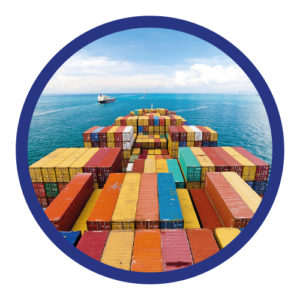 It is surprisingly common for companies to assume that their carriers limited liability will somehow cover them in the event of damage or loss of goods. This is not always the case.
IFS take care to remind customers that their goods may require insuring to full value to ensure they do not lose out in the event of a claim. It is worth checking whether it is the Exporter, the Consignee or Forwarder who are expected to arrange insurance cover.
Simply call our friendly and helpful team on: +44 (0) 1709 610 000 or send us a message. We would be happy to help.
IMPORTANT INSURANCE NOTICE – Please note…
IFS and our partners take a great deal of care when arranging the shipping of your goods, however, loss and damage do sometimes happen and it is EXTREMELY IMPORTANT that you have the benefit of cargo insurance.
In the event of loss/damage drivers, transport depots and shipping lines will either severely limit their liability to a very small amount, or make no payment at all. If you do not have your own cargo insurance we can arrange it for you. Please advise the value of your goods and we will provide a quotation. Thank you.
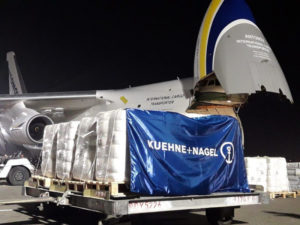 The largest charter yet took off in Sharjah (United Arab Emirates) on March 29. A Ukrainian Antonov An-124, one of the biggest cargo aircraft in the world, carried 111 tons of aid sourced from UNICEF’s warehouse in Dubai and landed in Poland the same evening. The goods will then be trucked to Ukraine.












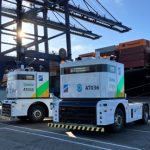


 When disruptions take place in China, it is significant because about a third of the world’s entire manufacturing capacity is based in the country.
 A source closely tied to Europe’s forwarding and shippers community said that, while “of course” trade with Russia continued, transport operations and financial aspects of the business were “grinding to a halt”, as efforts to persuade Putin to withdraw from Ukraine ratchet up.
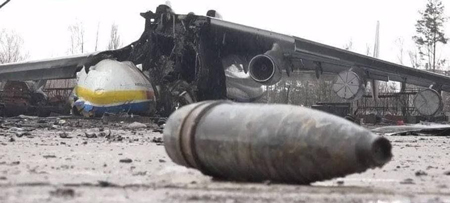 ‘Mriya’ which means ‘Hope’ in Ukrainian, the world’s largest aircraft is believed to have been undergoing repair and routine maintenance at Antonov’s airfield premises in Gostomel near Kyiv, when the Russian invasion of Ukraine began.