

New ‘Torus Defence Supply Chain’ announced to support the UK Defence sector
Amentum, GXO Logistics, Accenture and A.P.Moller – Maersk, have announced a new alliance, Torus Defence Supply Chain, to help strengthen the future of the UK defence sector.
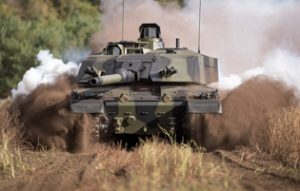 Torus will provide resilient, agile and integrated defence supply chain solutions, helping the UK defence sector adapt to the evolving threat landscape and build the agile capacity required to enhance sovereign capability.
Designed to help address the UK Government policy shift to readiness, visibility and data exploitation, Torus draws on alliance members’ proven capabilities and mission-critical expertise in military domain, procurement and supply chain. The alliance is underpinned by a shared commitment of collaboration, compliance and continuous improvement to solve complex challenges in the UK defence market.
Amentum will provide overall integration and programme management based on more than 60 years of support to UK defence operations, procurement, logistics support, programme/project delivery and transformation. Its global expertise, built over decades of defence, aerospace and national security experience in the USA and UK, ensures interoperability with allied sustainment systems and proven global buying power. Last September, Amentum announced plans to add another 3,000 people to its current UK workforce of more than 6,000 over the next four years.
GXO will develop and operate innovative logistics solutions, leveraging its more than two decades of experience partnering with leading aerospace and defence organisations. With A&D operations spanning more than 30 global sites, GXO recently bolstered its UK defence capabilities through the acquisition of Wincanton, a longstanding trusted partner to the UK defence and industrial sector. GXO currently employs more than 60,000 team members across 450 sites in the UK and is a Gold Award level member of the UK’s Defence Employer recognition scheme for its work with the Armed Forces.
Accenture will lead digital reinvention with a core role to deliver digital enablement and integrated decision support capability. Accenture’s deep experience of defence logistics information systems and digital transformation will enable real-time, single-version-of-the-truth visibility and smarter, data and AI-powered decision making that balance readiness, cost and resilience.
Maersk will provide global integrated movement solutions utilising its extensive network across multiple modes to enable global reach ensuring compliance with stringent security standards for defence and government cargo whilst ensuring the scale of its owned assets provide agility and resilience to allow defence to plan and react to a changing need. Read more from Multimodal >












 Due to the instability, many UK road haulage providers have introduced or increased fuel surcharges, with some reporting adjustments of 15–20%, taking effect around 9th March, 2026.
 The escalating conflict in the Middle East, particularly following recent U.S. and Israeli military strikes on Iran and subsequent retaliatory actions, has triggered major disruptions to global air and ocean freight operations.