

China lockdowns: The economic cost of a zero-Covid policy
War. Inflation. And now, Covid lockdown deja vu in China. It is a perfect storm for the global supply chain – how goods and materials get from other countries to you and me.
 When disruptions take place in China, it is significant because about a third of the world’s entire manufacturing capacity is based in the country.
If you’re buying something online there’s a very good chance it was made in Shenzhen – a city of 17.5 million in the south east where roughly half of all China’s online retail exporters are based.
So, when Shenzhen went into a six-day lockdown on Sunday after a massive surge in Covid cases, it sent shockwaves through the world’s businesses. The restrictions have since widened to other major cities and provinces like Shanghai, Jilin and Guangzhou.
Read more from BBC’s article >








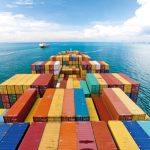





 A source closely tied to Europe’s forwarding and shippers community said that, while “of course” trade with Russia continued, transport operations and financial aspects of the business were “grinding to a halt”, as efforts to persuade Putin to withdraw from Ukraine ratchet up.
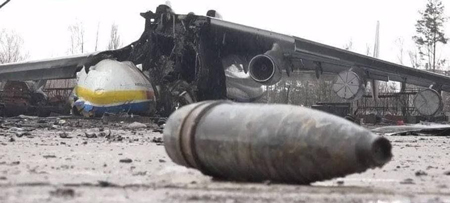 ‘Mriya’ which means ‘Hope’ in Ukrainian, the world’s largest aircraft is believed to have been undergoing repair and routine maintenance at Antonov’s airfield premises in Gostomel near Kyiv, when the Russian invasion of Ukraine began.
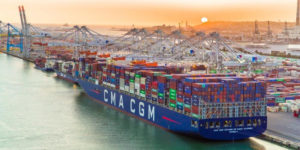 2,500 tons is more than required to transport all LCL (Less-than Container Load). DB Schenker will be able to reach net carbon zero-emission on a well-to-wake basis on the LCL segment, thanks to this over-allocation.
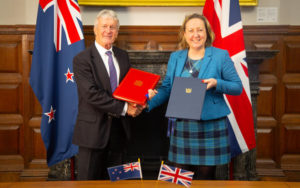 This deal is the most advanced agreement that New Zealand has signed with any other nation bar Australia and could boost the UK–New Zealand trade relationship by almost 60%, rising from £2.3 billion in 2020. The deal aims to make it simpler for British SMEs to export goods and services to New Zealand and further supports the UK’s efforts to join the Trans-Pacific Partnership (CPTPP).